
A Trip to Cherrapunji Misty Hills, Living Roots and Endless Rain
If you love rain, waterfalls, and dramatic landscapes wrapped in clouds, then Cherrapunji should be on your travel list. Also known locally as Sohra, this small town in Meghalaya is famous for being one of the wettest places on Earth.
But Cherrapunji is more than just rainfall records. It’s a place where nature feels raw and untouched, where waterfalls roar during monsoon, and where ancient traditions blend beautifully with breathtaking scenery.
A Glimpse into History
Cherrapunji once served as the capital of British-era Assam during the 19th century. The British were fascinated by its cool climate and scenic surroundings. However, due to excessive rainfall and logistical challenges, the administrative headquarters was later shifted to Shillong.
The name “Cherrapunji” is derived from the Khasi word “Sohra,” which is what locals still prefer to call it. The region is home to the Khasi tribe, known for their unique matrilineal culture where lineage and inheritance pass through women.
This cultural richness adds depth to your travel experience — it’s not just about sightseeing but understanding a way of life that’s deeply rooted in tradition.
Must-Visit Tourist Places
1. Nohkalikai Falls
One of the most iconic attractions is Nohkalikai Falls, the tallest plunge waterfall in India. During monsoon, it looks majestic, with water crashing down into a turquoise pool below.
There’s also a local legend associated with the waterfall, adding an emotional layer to its beauty.
2. Living Root Bridges
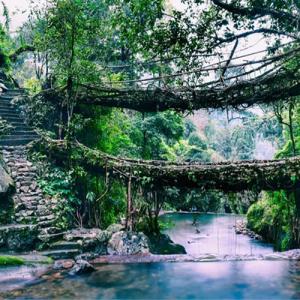
Cherrapunji is famous for its extraordinary Double Decker Living Root Bridge. These bridges are not built — they are grown.
The Khasi people have guided the roots of rubber trees across streams over decades, forming strong, natural bridges. Trekking to the Double Decker Root Bridge in Nongriat village is challenging but absolutely worth it. The journey itself becomes part of the adventure.
3. Mawsmai Caves
For those who enjoy exploration, the Mawsmai Cave offers a thrilling experience. Narrow passages, limestone formations, and dim lighting create an exciting atmosphere.
It’s a short cave trail, but it gives you a glimpse into the geological beauty of the region.
4. Seven Sisters Falls
Another breathtaking sight is the Seven Sisters Falls, especially during the rainy season when multiple streams flow side by side down a massive cliff.
The view during sunset, with mist rising from the valley, is unforgettable.
Local Food You Must Try
Traveling is incomplete without tasting local flavors. In Cherrapunji, Khasi cuisine offers simple yet hearty dishes.
Some must-try foods include:
• Jadoh: A rice dish cooked with meat and mild spices.
• Dohneiiong: Pork cooked with black sesame seeds.
• Tungrymbai: A fermented soybean dish with a strong, unique flavor.
Vegetarians can enjoy rice, local greens, and simple curries. Don’t expect heavy spices — the food here is subtle and earthy.
And of course, sipping hot tea while watching the rain fall over the hills feels like pure bliss.
Best Time to Visit
While Cherrapunji is famous for heavy rainfall, visiting during monsoon (June to September) gives you the full dramatic experience — lush greenery, powerful waterfalls, and misty landscapes.
If you prefer clearer skies and easier travel, October to March offers pleasant weather and beautiful views.
Final Thoughts
A trip to Cherrapunji is not just about ticking off tourist spots. It’s about waking up to clouds outside your window, trekking through dense forests, listening to waterfalls in the distance, and experiencing a slower pace of life.
It’s nature in its purest form — untamed, dramatic, and humbling.
If you’re someone who finds peace in rain, mountains, and quiet beauty, Cherrapunji will capture your heart in the most unexpected way.
TAGS : a trip to cherrapunji misty hills, living roots & endless rain, cherrapunji, trip, hills


